A Web D School Proprietary Framework
AI produces outputs. Experts are paid for outcomes. BRIDGE is how you become an expert.
Most creative professionals are good at making things. BRIDGE trains the layer above — how to diagnose what a brief is really asking, evaluate your own work before anyone sees it, and communicate your reasoning with the clarity that makes people trust you.

Why Talented Professionals Stay Stuck
Over eighteen years of teaching creative professionals, one pattern appeared — consistently, across disciplines, across years.
The students who grew fastest were not the ones with the best technical skills. They were the ones who could walk into a room and say — with genuine clarity and conviction — “here is the problem, here is how I thought about it, and here is why this is the right direction.”
The ones who stayed stuck were just as talented. Often more skilled. But they could not explain their decisions. They could show the work. They could not own it.
That gap is not a talent problem. It is a training problem.
Most creative education teaches tools and trends. It does not teach diagnosis. It does not teach evaluation. It does not teach the kind of communication that builds trust.
BRIDGE was built to close that gap.
THE 5% VS. THE 95%
The Layer You Operate From Determines Your Ceiling
Take any organisation. A hundred people join on the same day. Same designation. Same salary. Ten years later, five of them are Creative Directors, Marketing Heads, or running their own ventures. The other ninety-five are in decent positions — stable, respectable, and quietly stuck. The gap did not open because of talent. It opened because of one thing: the layer they chose to operate from.
THE 95%
- Receive the brief, execute it well
- Deliver on time, revise when asked
- Measured on output quality
- Good at their craft
- Replaceable — because execution is becoming a commodity
THE 5%
- Question the brief before accepting it
- Find the real problem before designing the solution
- Measured on outcomes, not just outputs
- Trusted for their judgment
- Irreplaceable — because judgment cannot be automated
“The difference between a creative professional and a strategic leader is not what they make. It is what they ask before they start making it.”
THE METHODOLOGY
Six Dimensions. One Transformation.
BRIDGE is a six-step perception diagnosis framework. Before any project begins — before any software opens — BRIDGE runs six questions in sequence, each one examining a different dimension of how the audience perceives a brand, product, or communication. It does not slow the work down. It ensures the work is worth doing.
B — Baseline Clarity
The Comprehension Diagnosis
Does the audience understand what this brand or product actually is? Before any design, copy, or campaign decision, BRIDGE asks: is the most basic communication working? Most perception problems start here — not with aesthetics, but with fundamental clarity.
The question: Does the right person immediately understand what this is and why it matters to them?
R — Relevance Mapping
The Context Diagnosis
Understanding is not enough. The audience must feel that this is for them — that it speaks to something they actually care about, in their current moment. BRIDGE maps the gap between what the brand is saying and what the audience is actually listening for.
The question: Does this feel relevant to the specific person we are trying to reach — right now?
I — Identity Signal
The Status Diagnosis
Every brand communicates a status signal — whether it intends to or not. People choose brands partly because of what those brands say about who they are. BRIDGE examines whether the identity signal the work is sending is the right one for the audience it needs to attract.
The question: What does choosing this brand say about the person who chooses it?
D — Define the Journey
The Lifecycle Diagnosis
No creative asset exists in isolation. It sits somewhere in a journey — before something, after something, leading somewhere. BRIDGE ensures that every piece of work is designed for where the audience actually is in their relationship with the brand — not where the brand wishes they were.
The question: Where is this person in their journey, and what do they need from this specific touchpoint?
G — Generate Magnetism
The Retention Diagnosis
After the first impression, what makes someone come back? What creates the pull that builds loyalty rather than one-time attention? BRIDGE examines whether the work is building genuine connection or just capturing passing interest.
The question: What about this makes the audience want to stay, return, or share?
E — Evolve the Message
The Adaptation Diagnosis
Brands and audiences change. What worked last year may be working against you today. BRIDGE builds the habit of questioning whether the current direction still fits — and what needs to shift before the work starts feeling stale.
The question: Is this still the right direction — or is it time to question the frame itself?
BRANDLENS 360° & PPR
BRIDGE Is Three Tools, Not One
BRIDGE — the six diagnostic questions — is the engine. But the complete framework includes two further tools that complete the transformation from thinking to communication.
THE EVALUATION FILTER
BrandLens 360°
Once the work is made, how do you know if it’s right — before you present it to anyone? BrandLens 360° is a four-angle evaluation system that examines every piece of creative work from the perspectives that matter most: clarity, relevance, identity, and impact.
- Clarity
- Relevance
- Identity
- Impact
Most professionals wait for feedback to find out if the work is right. BrandLens 360° builds the ability to know before you ask.
THE COMMUNICATION STRUCTURE
PPR — Problem, Perspective, Result
Having good thinking is not enough. You have to be able to make others see it. PPR is a presentation structure — three moves that make your reasoning visible and your decisions trustworthy. Every case study, every client presentation, every portfolio walkthrough at Web D School is built on PPR.
Problem
What was actually going on — the real challenge beneath the brief.
Perspective
How you approached it — your diagnosis, your strategic direction, your reasoning.
Result
What the work achieved — measured against what it was actually trying to do.
Most candidates show the work. PPR-trained candidates explain the thinking.
WHY BRIDGE MATTERS NOW
The Expert Economy Has No Ceiling
For most of the last two decades, creative careers ran on one equation: execute well, get paid. The designer who could produce better work faster earned more. The marketer who could run more campaigns earned more.
That equation is breaking.
When AI can generate a logo in thirty seconds and write a campaign brief in minutes, execution stops being a differentiator. In a world where execution is becoming a commodity, the only thing that commands a real premium is judgment.
The ability to read why a campaign is failing. To question whether a brief is solving the right problem. To walk into a client meeting and say — before the work even starts — “here is what I think is actually going on.” Those abilities are human. BRIDGE builds them deliberately.
The Execution Economy has a ceiling.
The Expert Economy has no ceiling.

The Execution Economy
Has a ceiling — and that ceiling gets lower every year. The only pressure is downward: faster, cheaper, more. AI is already competing here.
The Expert Economy
Has no ceiling — only scale. Judgment, diagnosis, and strategic communication are the currencies. No AI has figured out how to replace them. BRIDGE is your entry point.
HOW IT’S TAUGHT
How BRIDGE Is Taught at Web D School
BRIDGE is not a workshop you attend once. It is trained across every module, applied in every project brief, and practiced in every review session — in every course at Web D School.
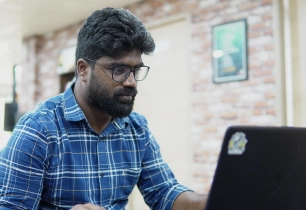
Before Every Project
Students run through the BRIDGE diagnosis before any execution begins. What is the perception problem? Who is this really for? Where does this sit in their journey? These questions become the foundation of every brief — small or large.

In Every Review Session
Feedback at Web D School is BRIDGE-led. Not “make it better” — but “what was the perception problem you were solving, and did this work solve it?” That conversation, repeated across every project, builds the habit permanently.

In Every Portfolio Case Study
Every piece of work in a Web D School student’s portfolio is documented using PPR — Problem, Perspective, Result. By graduation, students do not have a gallery of work. They have a body of reasoned decisions that any employer or client can follow.
SPARK Thinks. BRIDGE Communicates.
SPARK and BRIDGE are two sides of the same transformation. SPARK trains second-layer thinking — the ability to see the real problem, question assumptions, and decide what the work needs to do before execution begins.
BRIDGE takes that thinking further — teaching you to diagnose perception, evaluate your output, and communicate your reasoning with the kind of clarity that builds trust.
SPARK is the instinct. BRIDGE is the system. Together, they are the complete move from creative executor to strategic leader. Every Web D School student is trained in both.
THINKS
SPARK
Trains you to think at the second layer — to see the real problem, question the obvious, and decide what the work actually needs to do.
COMMUNICATES
BRIDGE
Trains you to communicate that thinking — to diagnose perception, evaluate your output, and present your reasoning with the clarity that builds trust.
START TODAY
Ready to Be Trusted for Your Judgment?
BRIDGE is taught across all Web D School online courses — woven through every project, every brief, and every feedback session from the first week to graduation. Book a free demo to see how it works in practice.